Concluding months of intervention, on January 3rd, the United States military captured Venezuelan President Nicolas Maduro. He will face charges in the US, including ones for narco-terrorism. Scrutiny surrounding Venezuela's place in global politics and America's involvement is at an all-time high.
Since Donald Trump's second term began as president of the United States, he has made it clear that his administration would put an emphasis on stopping the drug cartels of Latin America from growing, especially as it involved their exports to the US.
In March, the Trump Administration officially labeled drug cartels as terrorist organizations. Doing so allowed the United States more political freedom in addressing these organizations, whether they were directly threatening America or not. Politicians, on both sides of the political aisle, were agreeable to the idea of battling against the import of drugs into this country. However, the terrorist designation for the organizations responsible became a relatively partisan issue.
Less-publicized, but still relevant, there were also allegations of Venezuela stealing oil from the United States and other nations. There have been concerns over Venezuela's growing alliance with China, Russia, and Iran, too.
Attention to the overall matter ratcheted up considerably in August, when the New York Times reported that Trump authorized military action against the cartels. Nothing of significant consequence happened immediately, other than additional US military presence in the Caribbean near the northern portion of South America.
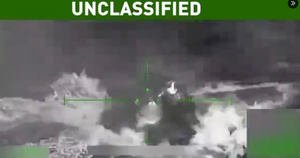
In September, Defense Secretary/Secretary of War Pete Hegseth greenlit multiple military strikes on boats in the Caribbean. Those boats, according to Hegseth, were drug-running ships from Venezuela that were en route to the United States. Naturally, the strikes killed those on board. Those attacks have been heavily debated over the past several months.
Trump publicly warned Venezuela that the strikes would move to land if necessary. He also told authoritarian President Nicolas Maduro that he must surrender or face the possibility of removal. Maduro taunted Trump in return and challenged him to try.
Then, with the calendar just flipping to 2026, the United States struck Venezuela directly and captured Maduro in the capital city of Caracas. He will be indicted in the US on charges, including narco-terrorism and various weapons charges. There were no American deaths in the overnight operation, titled Operation Absolute Resolve, though several US military personnel were injured.
Aside from political implications, did the United States have a moral right to do what they did? Was blowing up suspected drug boats, bombing Venezuela, and beginning a takedown of a corrupt government a morally good thing from a biblical perspective?
This article will examine some facts and observations about the US-Venezuela situation, will include the opinions of the political Left and the political Right in the United States, and will present a biblical moral argument for where the government got things right and where they fell short.
Some facts and observations about the situation with Venezuela
- Nicolas Maduro was president in title only in Venezuela. He was a dictator whose government rigged elections to keep him in power since 2013. He followed the economic and democratic backsliding of his predecessor, Hugo Chavez, leading Venezuela much further into authoritarianism. Maduro was also, allegedly, the head of the Cartel de los Soles ("Cartel of the Suns"), one of the largest drug-trafficking organizations in the Western Hemisphere.
- The United States has had a warrant out for Maduro's arrest since 2020. He was indicted on multiple charges that year, and an international bounty was placed on him. Argentina joined the US with a warrant in 2024, and several countries appealed to the ICC (International Criminal Court) for the dictator to be brought up on international charges. The proposed charges included election fraud, drug trafficking, weapons trafficking, and more.
- Trump announced that the United States will play a major role in leading Venezuela "until such time as we can do a safe, proper, and judicious transfer" of power.
- In the coming days, the US Senate will vote, citing the War Powers Resolutions, on whether or not to block the Trump Administration from any further action in Venezuela.
- Seemingly, public sentiments from other nations have ranged from severely negative to neutral to overwhelmingly positive. Specifically, Russia and North Korea, other authoritarian states, have condemned the operation. Speculation has arisen that China and Iran are not happy, either. Spain and France are US allies that have publicly come out in opposition to American involvement in Venezuela and claim that the Trump Administration broke international law. Conversely, Argentina, Panama, Ecuador, Canada, and many in Venezuela have come out in support of the move.
- Heavily attended celebratory gatherings have taken place in Venezuela since Maduro's apprehension.
- Saturday's Operation Absolute Resolve marked the 36th anniversary of Operation Just Cause, a similar though smaller-scale, US-led regime-toppling of Panama's Manuel Noriega.
- In the aftermath of the Maduro arrest, Trump took a shot across the bow directed at Colombian President Gustavo Petro, citing the country's large cocaine exports and the impact those exports have had on the US. Earlier in the week, he also threatened Iran over its handling of peaceful political protestors. Secretary of State Marco Rubio made a similar threatening remark that was directed toward the communist government in Cuba. South Carolina Senator Lindsey Graham has been all over social media, threatening China, Russia, Iran, Cuba, and even European allies. Graham even called Operation Absolute Resolve a "warning" to other nations.
- In his effort to help the people of Venezuela, Elon Musk, billionaire and founder of SpaceX and Starlink, is providing free broadband internet service to Venezuelans for the next month.
What the Left says about the situation with Venezuela
The Left in America is somewhat split on the US bringing in Maduro. On one hand, most agree that he needed to be removed from power. However, a large number of Democrats have taken issue with the process by which it happened. Seemingly, for some on the left side of the aisle, the biggest issue is that the Trump Administration led the operation.
- Like Republicans, most Democrats appear to be happy that Nicolas Maduro is no longer in power in Venezuela. However, many are skeptical about the long-term success of Operation Absolute Resolve and believe that another authoritarian leader will simply take his place. There has also been considerable pushback from the Left over the operation happening in secret.
- New York Representative Hakeem Jeffries released a statement in which he seemingly supported the idea of what happened in Caracas. However, he expressed severe disapproval with the lack of answered questions and the Trump Administration acting without Congressional approval.
- Connecticut Senator Chris Murphy is taking heat for his stance on Venezuela. Not only has he been critical of the process (calling it "wildly illegal"), but he has also said it wasn't necessary and was a ploy to win oil money. He previously publicly criticized the first Trump Administration and the second Trump Administration for not taking action against Maduro. During an interview on CNN, host Dana Bash called out Murphy's inconsistencies. New York Senator Chuck Schumer has been exposed for similar hypocrisy.
- Some on the Left, primarily those who oppose Trump at every turn, are calling for his impeachment, citing his lack of congressional approval for the Venezuelan operation. However, Barack Obama also did not seek congressional approval for the raid that killed Osama Bin Laden in Pakistan or for the strikes against Libya (and the eventual boots on the ground) that helped overthrow dictator Muammar Gaddafi. Trump also notified Congress months ago that the United States was "in armed combat" against drug cartels in Latin America but did not provide specific details.
- As it pertained to the previous boat strikes, liberals were nearly universally against Trump's and Hegseth's decision. California Representative Adam Schiff was one of many loud voices condemning the strikes as illegal and a deviation from the American justice system. He and others also criticized the lack of transparency after the strikes.
What the Right says about the situation with Venezuela
Republican politicians in America are somewhat split on Operation Absolute Resolve, as well. There is more complete support of the operation from individuals on the Right than there is among Democrats. However, some conservatives question the manner in which the Trump Administration circumvented Congress. Others doubt that it will prove to be a long-term benefit to Venezuela.
- Almost universally, American conservatives support Venezuelans having access to a free and legitimate democratic election and acknowledge that something like that could never have happened with Nicolas Maduro in power. Some have concerns over the process of Maduro's removal.
- Politicians like Arizona Representative Abe Hamadeh, South Carolina Senator Lindsey Graham, and Florida Representative Maria Elvira Salazar are among the large number of Republicans who support Trump and his administration in this regard. In fact, Representative Salazar even argued that most of the arguments against the legality of Operation Absolute Resolve are wrong because of misunderstandings of the War Powers Resolution.
- Other Republicans are less-than-thrilled.
- Georgia Representative Marjorie Taylor Greene, who had a recent falling out with Trump, said that the move for the US to help run Venezuela isn't "America first."
- Kentucky Representative Thomas Massie did not provide support for Trump's decision to go after Maduro. He posted on social media that he felt the attack violated the Constitution. He also spoke before Congress on Saturday, arguing that this regime change will wind up as a failure like "Cuba, Libya, Iraq, or Syria." Kentucky Senator Rand Paul shared a similar, although seemingly less hostile, opposition to the operation. He is the lone Republican sponsoring the Senate's upcoming vote to block Trump from additional military action in Venezuela.
- The feelings were similar regarding the strikes against the Venezuelan drug boats. Many conservatives celebrated what they viewed as wins against individuals and cartels that were bringing chemical warfare to the US. A handful of others raised concerns about the lack of due process, instead favoring an approach that would have captured the boats, instead of blowing them up.
What the Bible says
The Bible does not mention the nation of Venezuela. It does not mention the United States. It does, however, contain teachings that are relevant to this conversation. This discussion is nuanced, but there are enough related biblical principles to come to a few conclusions while leaving other parts of the discussion more "gray."
God is committed to justice. In this case, that gets complicated.
The Word of God is clear: The Lord is a just God, and He is committed to seeing justice upheld in His world. "All His ways are justice," says Deuteronomy 32:4, and Psalm 9:4 states, "He has established his throne for justice." God also requires his people to "act justly" (Micah 6:8), "seek justice" (Isaiah 1:17), and "observe justice" (Psalm 106:3). The Bible describes the Lord as a God who "loves justice" (Isaiah 61:8), who "incline(s) [His] ear to do justice" (Psalm 10:18), and who lets "justice roll down like waters...like an ever-flowing stream" (Amos 5:24).
Because of that, God is also against injustice, and there was (and still is) plenty of government-led injustice in Venezuela.
With that thought in mind, an intervention to potentially stop or lessen those injustices would seem incredibly biblically supported, even possibly biblically required.
Scripture calls wicked political leaders "an abomination" (Proverbs 16:12) and says that the Lord will remove them (Daniel 2:21). In the book of Judges, Jael is even applauded for killing the general Sisera, the head of evil King Jabin's military, while he slept.
However, obeying the law is a clear Christian doctrine expressed in passages such as Romans 13 and 1 Peter 2. Though Trump and the United States government are not exactly Christian, believers hold to a view that God's Word is the standard for all mankind, making the requirement to follow earthly laws one that applies to all people. Right now, the legality of the United States' actions remains under review.
In an equally important way, any defense of the United States' actions as being in self-defense, border defense, or even Venezuelan defense must acknowledge the nation's need for proper intelligence. In the case of the drug-running boats, the burden of proof is on America to correctly identify those boats, their intentions, and their passengers. At this point in time, there hasn't been much transparency about the boat strikes, which doesn't necessarily indicate any wrongdoing or mistakes; however, it doesn't prove that the strikes were completely above board, either.
Plus, although no American personnel were killed, there were Venezuelan and Cuban forces killed in the assault that led to Maduro's capture. Other reports also say that some civilians were killed in Caracas, too. That cannot be ignored. In that way, at least in some capacity, justice might not have been upheld.
There is a biblical reality that requires individuals to seek to do what is best for others.
Even still, there is biblical precedent set for skirting certain laws for the sake of seeking justice for individual people. The examples of Rahab lying to protect the Hebrew spies in Joshua 2, the midwives defying Pharaoh on behalf of God's people (and babies) in Exodus 15, and the wise men disobeying Herod following his command for them to lead him to baby Jesus in Matthew 2 are just a few of the instances in Scripture in which this happens.
Despite these behaviors technically being against the law of the land (and, in the case of Rahab, even the Ten Commandments), they were all pleasing to God because they upheld His Law in a greater way, which supersedes the statutes of the land. Rahab's story is a bit more complicated, but Hebrews 11 commends her, indicating that preservation of life is of greater consequence to God than a lie to evil men. Some commentators believe that she still sinned by lying (and that may be true, though it is debated), but she would have committed a greater sin by allowing the spies to be captured and killed.
In a related way, doing what is good and right for another image-bearer is a requirement in God's Law. James 4:17 says, "So whoever knows the right thing to do and fails to do it, for him it is sin."
With a wicked tyrant leading the government, enriching himself at the expense of his citizens, and trafficking drugs and weapons across the Western Hemisphere, it is easy to argue that doing "the right thing" for Venezuela would include Nicolas Maduro's removal.
In more ways than one, the end result of Operation Absolute Resolve provides a potential path to life improvement for the average Venezuelan.
Proverbs 18:31 demonstrates the contrast between the one who helps a needy person and the one who holds a needy person back: "Whoever oppresses a poor man insults his Maker, but he who is generous to the needy honors Him."
Venezuela has been in a humanitarian crisis. Scripture speaks to how that should be handled.
Specifically, Venezuelan citizens were in trouble under Maduro. Economists have said that the country's financial fall has been the worst in the history of the world for a country not actively at war, experiencing revolution, or that has collapsed altogether. Socialism (you can read Narrow's Christian rebuke of socialism here) has been a major contributing factor to this collapse, along with rampant corruption.
Because of the sharp decline in the nation of Venezuela, many citizens have been essentially refugees within their own country. Severe economic need is present, but government-sanctioned persecution has been common.
The Bible is clear about how God expects refugees and those in need to be treated.
Psalm 82:3-4 states, "Give justice to the weak and the fatherless; maintain the right of the afflicted and the destitute. Rescue the weak and the needy; deliver them from the hand of the wicked."
The people of God were also refugees for parts of their Old Testament existence, something the Lord repeatedly reminds them of in an effort to show them the importance of looking after others. Immediately following the Exodus event, He tells Moses and the Hebrews, "You shall not wrong a sojourner or oppress him, for you were sojourners in the land of Egypt" (Exodus 22:21) and "You shall not oppress a sojourner. You know the heart of a sojourner, for you were sojourners in the land of Egypt" (Exodus 23:9).
In a related way, every Christian who has ever lived once had a need of being rescued. In fact, Ephesians 2:1 and 2:5 say that believers were once "dead in the trespasses and sins in which [they] once walked" but have been made "alive together with Christ." There is no greater rescue possible than the one Christ has provided for those who are in Him, so the Lord's call to care for refugees because of one's own past as a refugee—that applies to all believers.
The Sixth Commandment says, "You shall not murder," and that is distinguishable from "You shall not kill."
The taking of life is tragic, at least in some way, in every instance. Because some individuals died in the Venezuelan strikes, some conversations around the Sixth Commandment have arisen.
Though different translations of Exodus 20:13 may say "You shall not murder" or "You shall not kill," the proper translation is murder. In His Word, the Lord distinguishes between killing in self-defense, in war, in redemptive work, etc., from murder.
Murder, according to Jesus' words in Matthew 5, involves anger or hate within one's heart. Essentially, any slaying that is not for the express purpose of upholding more life (thus honoring the Sixth Commandment) would be murder.
Many critics have accused the United States of acting, at least in part, in its own interests in this endeavor. Specifically, America has been accused of intentionally positioning itself well for Venezuelan oil, gold, and minerals.
If that (or something similar) was a motivation for Maduro's removal, obviously, sin is present. The United States would have no right to flex its military might for the purpose of enriching itself; in fact, that behavior would be akin to old imperialistic practices, and the deaths that occurred would not just be tragic, but they would be murder, as well.
Sovereign nations may protect their borders.
It is not wrong for nations to secure their borders or for people to protect themselves and their property. If the United States has been dealing with as much of a drug trafficking issue as the Trump Administration says, then there is a solid argument that at least some of their actions were within the realm of self-defense and border security.
In the Lord's sovereignty, He establishes borders, kingdoms, and governments. Acts 17:26 reads, "And [the Lord] made from one man every nation of mankind to live on all the face of the earth, having determined allotted periods and the boundaries of their dwelling place."
Countries desiring national political autonomy and security are common in Scripture. As evidenced throughout the Old Testament and even further through the life and ministry of Paul, the citizenship of a country's people is important.
The Sixth Commandment (Exodus 20:13- "You shall not murder.") also provides a glimpse into the value of human life and, thus, the importance of protecting it.
Just as one locks the doors to his house to protect the people and property within it, a nation does the same. That does mean that no one ever visits or that there is no possibility of another person coming to live in that house. It does, though, mean that visitors should abide by the rules of the house and that anyone added to the household must do so in a manner that is above board and approved by the owner.
Final verdict
The United States' harsh and violent dealings with Venezuela over the past several months, culminating with the arrest of President Nicolas Maduro, are not easy to swallow.
America's full motives are under investigation, and if found to be acting primarily in self-service instead of self-defense and in loving aid of Venezuela, then the actions must be condemned.
However, if the United States's actions against Venezuela were for the protection of both countries involved, then not only were the actions permissible, they were a good thing.
In the meantime, Christians can rest in knowing that God has removed and appointed every ruler on this Earth for His purposes. The wickedness of Nicolas Maduro is no longer hanging over Venezuela, and that is a good thing. However, believers can pray for the Lord to continue working, as more government corruption remains in Caracas.